
Do We Need Provocations to Start Conversations?
Or: How I will learn to stop resisting and love the bait - A Year in Review, Part 1
My book, Critical Internet Literacies, was published on January 1, 2025. For over 240 pages, I argue we need new approaches to apply media literacy and “read” internet media since most online content is referential, reactionary, cumulative, and hard to access even if you are “very online.” I document dozens of case studies, from the “slap a teacher challenge” Facebook hoax to a VERY intense takedown of the moral panic documentary The Social Dilemma.
And ya know what I learned? (Well, aside from the fact no one wants to read academic texts?) I learned that success in this genre is about attitude and approach. My approach? Well, it’s too angry.
I’m proud of the book, but I don’t think it was effective. And I wish it was, because 2025 has been a year of “I fucking warned you dude. I told you bro.” For example, by mid-summer, the official DHS account was literally posting the 14 words meme with capital H’s (warned you: pages 117-122) and making social media clout videos at a concentration camp, all while the “opposition party” was basically like ¯\_(ツ)_/¯
I’ve studied and published on the subject of internet media for 18 years (that is a long time) and in 2025, my anger was increasing daily, especially so since I started warning people about Elon, deepfakes, algorithmic exploits, Charlie Kirk, and fascistic aesthetics in 2018.
And this year who do people listen to?
Jonathan Haidt.
The guy with the easy answers. The guy who haunts me. The worst part is that he’s not entirely wrong. There’s a lot he gets right (more on this in a bit). But, to me, Haidt, (like his Gallowayan similars) are providing conceptual solutions to VERY complex topics.
I could spend the rest of this post explaining how Haidt didn’t “read [his cited studies] with a sufficiently critical eye” or “that there is no evidence that using these platforms is rewiring children’s brains or driving an epidemic of mental illness” or that his rhetoric amplifies existing moral panics that distract from the real issues in his book.
But aside from that, I won’t. Because none of that matters. Because Haidt speaks to the public with the attitude necessary to share this information and provokes the conversation. As Caroline Odgers starts in her critique of The Anxious Generation in Nature: “this book is going to sell a lot of copies, because Jonathan Haidt is telling a scary story about children’s development that many parents are primed to believe.”
And this happens to make my work really really really really (not enough reallys) hard to do. It’s the same with my thoughts on Scott Galloway’s very popular approach to the manosphere. (Which I’ll get to in Year in Review Part Deux.)
However, I’ll admit that my issue is actually more my own than Haidt’s. I have resting asshole voice. I’ve been told (and tbh I know) that my tone comes off as too preachy/mean. I mean it’s my job to lecture people, but it sure as shit doesn’t get me invited back to parties.
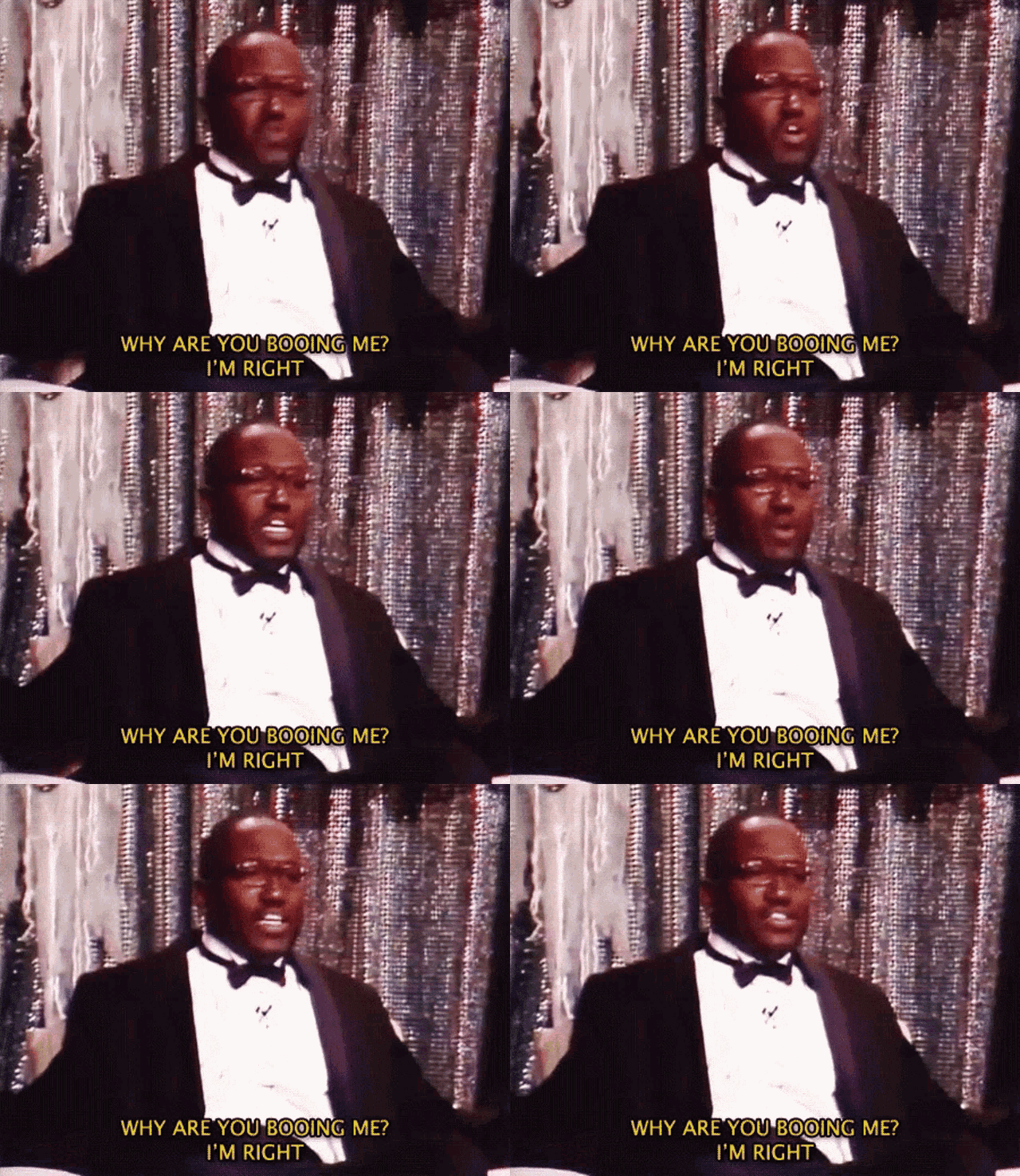
This summer, at the Salzburg Media Academy, I gave my yearly big lecture on internet culture about how it continues to overlap everyday life and the students loved it. The faculty looked at me like I was insane. Made me feel like this gif:
So I sit with this and continue to do my research and do my teaching and my writing here and otherwise, but the anger continues.
Then, last week, I had a really great catch up call with my colleagues from Salzburg, Chris Harris and Paul Mihailidis. (Side note: if it wasn’t for Paul and his graciousness, I certainly would not even have an academic career. Forever thankful.) I brought up the ill-conceived bills in the US government like KOSA (which is inspired by Haidt) and the Australian “social media ban” (in scare quotes because it’s not really working) (also, these bills will only work if we decide we want extreme levels of surveillance and authoritarian control over media flows). I was being snarky because Paul has a soft spot (like several other colleagues) for Haidt’s work.
And Paul said he’s fully aware of the critique and his shortcomings, but his value comes from his provocations. He asked how else may we have this conversation at such a scale?
And shit. He’s right. I didn’t want him to be right. He reminded me that protectionists have been part of media literacy since he was 9 years old, but we need an entry point for these tough - and very complicated - conversations. It’s not to say Haidt is a useful tool (though I would say that), it’s to say he’s an overall benefit to our work.
And so that brings me back to Haidt. I found this great piece by Jeroen van Baar on his 3 Quarks Daily site called “Why academics are annoyed with Jonathan Haidt, again” and it shifted my perspective quite a bit. Van Baar writes that we need to see Haidt’s perspective from an approach he calls “Haidtism” and it helped him like the book. Van Baar writes, “According to Haidtism, society is suffering from a loss of structure” and:
When viewed in this light, social media simply happened to be at the wrong place at the wrong time. As Haidt explains well, social contact online is characterized by being one-to-many and asynchronous, as opposed to the intimate and immediate interactions of the physical world. In this way, social media symbolize and effectuate, but did not cause, the loss of societal structure and connectedness.
As a media archaeologist, I like this take a lot. It’s not memetic for me to admit that I think of the Roman Empire all the time, it’s my job (and I’ve taught media studies many summers in Rome since 2014). We are living through one of the millions of interesting moments in human history and, ya know what, maybe Haidt’s take is an intervention that helps spark the conversation we need to have.
A pop culture non-fiction may be what’s necessary to facilitate conversations that most people would not bring up otherwise. Perhaps we need to be grateful. My goal in 2026 will be to cool off a bit and approach this topic with the sincerity that people already have in their curiosity of the subject.
It’s really the advice I give anyway: Persist. It’s a form of media literacy that means facing the issue head on rather than resisting, embracing complexity, and developing grit. If the whole thing I’m working with is like a glacier, there’s more value in climbing over it than trying to hold it back.
[To my mainstays, I am not dying and do not require help because I’m finding light in Haidt’s work. Safeword: babaganoush.]
New Media Homework Year in Review Part 1
I’ve been really proud of my interview takes this year. I was interviewed live on CBS Morning News about rage bait and on Vox’s Today, Explained (life goals!) about the Young Republican’s group chat and I had the chance to speak with over a dozen incredible journalists too about my research. Many of these hits didn’t provoke too many conversations though. Usually I get like “cool, good job” from friends, but it doesn’t stop me from sharing my goal, my never-ever-ending goal, which is for people to shift their mindset so they understand that internet culture is culture and we need to take online media seriously.
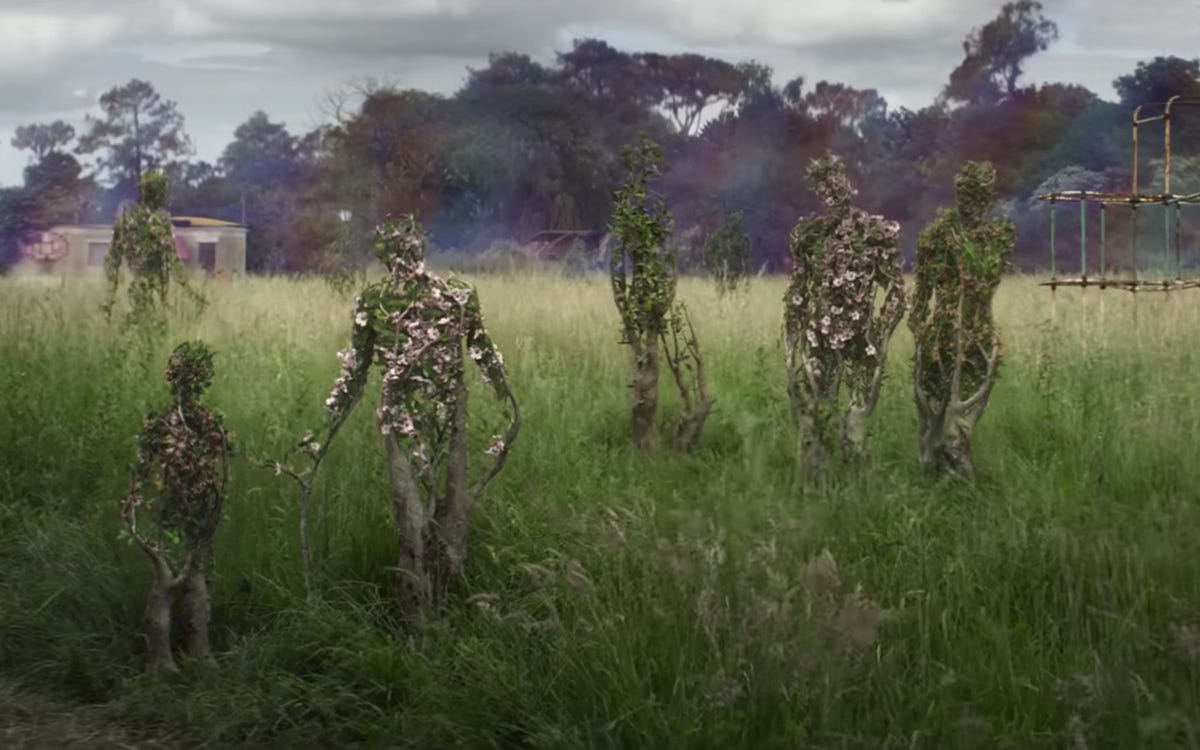
In my view, the media culture we live in today is more analogous to the mixed species and interpretive beings in Jeff VanderMeer’s Southern Reach series (the fourth book, the prequel Absolution, is amazing). Or maybe internet culture is sort of like the kudzu vines that are eating the world and we’re constantly cutting through them? Either way, we’ll have to co-exist with the culture as it overlaps our waking lives.
With all that said, 2025 has been a hell of a year as we’ve collectively seen this all happen in real time. As American fascism unfortunately grows, thankfully there has been a lot of fantastic media I’d like to highlight as some of the best material I’ve come across in these dark and interesting days.
Taylor Lorenz - Power User Podcast
Taylor Lorenz’s work this year has been great. She’s been independent since last fall and in 2025, she’s really hit her stride. I’m quoted in the video “‘Someone needs to do it’” (above) which has over 1.1 million views. It’s not really as provocative as the title seems; Taylor asks the question of how we, as a country, get to the point where we can even say the (now too common) phrase, “someone needs to do it.” This is a sober look at the normalization of political violence and a look at how the political elite (Trump and Biden) enable acts of slow violence like the removal of protections for the vulnerable.
Aside from this video, her other work is fantastic and I highly recommend Taylor’s Free Speech Friday videos/podcasts. Excellent commentary with great guests that help explain stories that the mainstream (which manufactures consent a bit too often) isn’t covering with such clarity.
Posting Through It with Jared Holt and Michael E Hayden
On January 6 of this year, a day remembered as the anniversary of when Ken Griffey Jr was inducted into the Baseball Hall of Fame, and not so many other important events, extremist researchers and all around great guys Jared Holt and Michael E Hayden rebooted the “Posting Through It” Podcast on Patreon. This show has been my rock for the year. These guys offer a clear eyed view of what’s going on from their expert perspective and do it with the sardonic humor that I absolutely adore.
Their “Who the Hell Is…” series are highly researched episodes that fill in the blanks on characters now emerging into the mainstream like Nick Fuentes, Jack Posobiec, and Candace Owens. I’ve been tracking these far right people for a decade as well, but (like I mentioned earlier) have a hard time explaining them. Now I just share Posting Through It eps. Their “Who the hell was Charlie Kirk” is the best coverage of the media martyr that exists as far as I’m concerned.
Girl on Girl: How Pop Culture Turned a Generation of Women Against Themselves by Sophie Gilbert
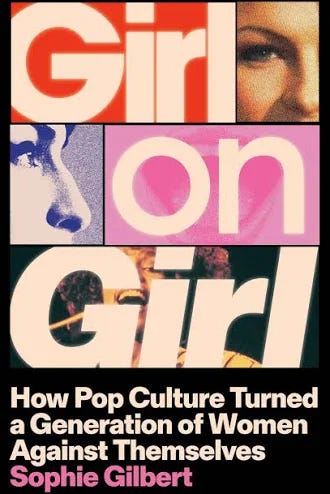
Sophie Gilbert’s book is perfectly timed for “the year men broke.” Every op-ed framed on “men’s struggles” could be countered with Gilbert’s book. I enjoyed this book because it’s one of the very few that use media history as a primary framework for the growth of the manosphere, and looks at the way mainstream media basically created the very real anti-feminism movement that started in the 90s and continues through to the tradwife movement.
Tell the Bees - Substack and TikTok
On that note, you should be following Josh Lora’s “Tell the Bees” Substack and TikTok. Lora’s commentary is incredible and spot on for our fractured times.

Garbage Day Newsletter and Panic World Podcast
Ryan Broderick’s work is probably the most suggested content I give to my students. Many are curious about higher level internet culture research, but don’t know where to start, so I always point them to Garbage Day and Panic World. My newsletter drafts folder is full of half-baked takes that, by the time I start really diving into them, I find Garbage Day in my inbox with the best angle and approach. This year Ryan expanded his team and joined Courier and the work has become invaluable to anyone who really wants to understand how and why ~*~*~ all this ~*~*~ is happening.
The Russiagate episode (above) was excellent and Ryan’s explanation of the age of the edgelord shooter is very important.
The Americana by Sarah Laurent
They say if you want to know about American culture, ask someone from Europe. Well, do I have a suggestion for you! Sarah Laurent is a French journalist who has some of the best internet culture takes I’ve read this year. I highly recommend subscribing to her work. I “restacked” (not sure what that means) her recent post Woke 2.0 about the likely reactionary movement coming following the cruelty of the present.

Digital Void
It really goes without saying that I am forever grateful for Josh Chapdelaine and his friendship and work. He founded the DV project and we got to do some amazing shows this year. The project continues and is now led by the amazing Rachel Greenspan. The next show will be in February. More on that soon.
You!
Thank you for reading this and being here for my thoughts and I really think you’ll like what I have planned for the next year. I’ll be sharing what I think are the best articles of the year in Part 2 of the Year in Review.
Until next time, stay curious, be vigilant, and persist!
New Media Homework is a newsletter that takes a critical internet literacy approach to online media and culture. Thank you for reading! Feel free to share and tell others to subscribe.